Sunday, March 6, 2016

Maple Sap Americano's at Gimme Coffee this Week!

MECKLENBURG, NY - One of the oldest forms of forest farming comes in the tapping of tree sap for delicious and nutritious products that arrive as the seasons change (thaw) from winter to spring.

Tree saps have long been viewed as a spring tonic by many cultures around the globe. Tree saps are loaded with minerals, nutrients, enzymes, antioxidants, phenolic compounds, and more.

In Korea specifically, there is a long history of sap consumption and most comes from the Acer mono, a maple which is called gorosoe, meaning “the tree that is good for the bones” in Korean. This is likely due to the high mineral content in sap, most notably calcium, magnesium, and potassium.

There are even places in Korea where people can take weekend retreats, visiting the mountains and consuming as much as 5 gallons of sap per day while sitting on heated floors with conditions similar to a sauna. The idea is to detox the bad stuff and unclog the body from a long winter. In Korean markets, Maple Sap usually sells for $5 – $10/gallon. (See this 2009 New York Times article on the topic)
Recently in North America, the so-called “functional beverage” industry has taken off, in part because consumer are becoming more aware of the health problems associated with sugary sodas and drinks, and are seeking alternatives. Just a few years ago, no one had heard of coconut water, but now its a mainstay at stores around the continent. Maple water, which is minimally processed and packaged, is now beginning to show up on the shelves with names like “sweet water” and “vertical water.” The purity of the product, along with it being hyper-local and sustainable to produce, separates it from coconut and vitamin waters commonly available on the market today.

Wellspring Forest Farm & School is excited to announce the availability of Maple Water from our forest to consumers in the Finger Lakes region as we enter March, the traditional month where sap flows the most in New York.

You can try our maple water in several ways:

-- Visit a Gimme! Coffee location in Ithaca or Trumansburg for their special “Maple Sap Americano” drink, available for a limited time beginning March 7th. The coffee wizards brew some of the best coffee around, and when we dropped off some sap for them they said “We especially like how it simultaneously softens the cup, and amplifies the tastes of the specific coffee.” Give it a try!

-- Visit the farm for our Maple Weekend & Farmers Market event in partnership with the NYS Maple Producers Association on March 19th and 20. We will have sap to try and bottled sap for sale! Other activities include live music, wood-fired pizzas, a farmers market on Saturday, and workshops on making maple syrup and cultivating mushrooms on Sunday. See our facebook event page for more info.

And, if you needed more reasons to try it, here are the top 5 reasons to drink maple water:

1. Its the cleanest water you will ever drink. Maple water is filtered through the cellular tissue of a tree, which acts like a big water filter. It comes out essentially sterile and we’ve worked with Cornell Food Safety to determine the process to keep it clean, crisp, and refreshing.

2. It is loaded with vitamins and minerals. Several studies from Korea have cited the potential benefits of maple sap consumption in lab settings for treating osteoporosis, hypertension, and even curing hangovers. Most analysis has been done on the basic content of the maple sap, which has over 50 vitamins and minerals, and also a number of probiotics similar to those found in yogurts and other dairy products.

3. It tastes amazing! The flavor is subtly sweet with hints of vanilla, almond, and caramel. Sap can be drank straight or used in cooking or to make tea or coffee.

4. It connects you to the winter-spring thaw. The season for sap flow is a short window between late January and into March. The sap content, taste, and volume varies each week, as winter changes to spring. The flow of sap is nature’s thermometer, telling a story of one of the most dynamic times of the year.

5. It supports sustainable forest farming and farmers. We have been tapping trees for over a decade and continually strive to use the latest technology and methods to ensure tree health as we harvest this amazing tonic. Supporting farmers buy purchasing local sap and syrup means you are helping farmers utilize their woods, which means that forests are likely to be kept and not cut.

Tuesday, January 19, 2016

Seeking applicants for 2016 Apprenticeship


Wellspring Forest Farm is seeking part-time apprentices for our agroforestry farm in the Finger Lakes Region of New York. Positions ideally run from June 1 to Oct 1 (end dates are flexible) and require a commitment of 2 full days of work on farm each week, a share in daily farm chores, and attendance at orientation June 6 -8. Apprentices can camp onsite or commute to the farm.

This 4-month apprenticeship offers individuals an opportunity for hands-on learning and skill building at an innovate and unique forest farm.

We engage in community education and produce of a range of products including mushrooms, maple syrup, duck eggs, pasture lamb, and small fruits including elderberry and Paw Paw.

Our fundamental farm goal is to demonstrate methods for ecosystem restoration that also produce food, medicine, and materials.

Your involvement in this working farm will broaden your understanding of forest farming, agroforestry, permaculture and forest gardening and provide training in both the technical and business skills required to run a small farm.

Apprentices will engage in the following farm systems and topics:


Mushroom cultivation:  Learn to manage a 1,000 log shiitake operation in the woods and oysters grown on straw for commercial markets, along with various stump and woodchip bed inoculations. Develop an understanding of harvest timing, grading and packing for markets, delivery and budget management aspects of the enterprise.

Sheep: Help rotate our flock of sheep on pasture in open field, tree planted, and woodland grazing systems. Learn grass ecology and methods for supporting optimal health. Understand proper fencing techniques and help develop a new silvopasture (woodland grazing) system.

Ducks: Learn to use ducks as a fertility and pest control tool, rotating them through various system including mushroom yard, sheep pasture, gardens, and swale systems. Deliver eggs and learn invoicing and record keeping.


Water capture and storage: Design, installation, maintenance of productive water systems including ponds, swales, and stream buffers. Plant and maintain elderberry and paw paw crops using tubes and cover cropping,

Forestry: Discuss tree ID, ecology, chainsaw safety and practice techniques for tree planting, marking and felling trees, and monitoring forest health.

Core farm skills: Practice observation, site assessment, and holistic goal setting as part of the farm design process. Learn proper use of scythes and other hand tools, and considerations for farm safety.


Expectations and Qualifications

Apprentices are expected to provide their own tent, (though we may be able to accommodate a small camper,) food (other than a CSA share), and transportation to and from the farm. They take part in shared farm chores including composting food and humanure properly, feeding animals, and maintaining clean and organized shared spaces.
                                 
Though previous experience is not required, ideal candidates have

-       Experience working on farms, homesteads, or with trade skills
-       A developed work-ethic that includes being proactive and detail oriented
-       The desire to learn about sustainable forms of agriculture
-       A demonstrated capacity to work with others and independently
-       The ability to be physically active and comfortable being outside most of the day in a variety of weather conditions
-       Familiarity with power tools, chainsaw, carpentry a plus


Costs

There is a $30/week fee to participate in this high quality educational program. This fee helps us cover our costs and offer personalized mentoring to our apprentices. We also provide a local vegetable CSA share, garden space, and pay for your attendance to three quality agroforestry trainings offered during the season. ($1225 value)


Apprentices have access to our camping area, shared kitchen and hot showers, along with a large two-acre pond for swimming. 


About us

Wellspring Forest Farm is a 10-acre agroforestry farm. Steve and Elizabeth Gabriel work part-time on farm, and will both provide mentoring and teaching during the days of the Apprenticeship program. Steve is an Extension Educator with Cornell Small Farms Program and co-author of Farming the Woods. Elizabeth Gabriel is Executive Director of the Groundswell Center for Local Food and Farming and an accomplished yoga instructor.  

The farm is featured in the film INHABIT: A Permaculture Perspective, as well as in numerous articles and audio podcasts.


We are located in Mecklenburg, NY, 12 miles from Ithaca, 8 from Trumansburg and 12 miles from Watkins Glen. We share a driveway and a 2-acre pond with 4 friendly neighbors. Apprentices will likely want to have their own car for personal transportation.


How to Apply


To apply, send a cover letter and resume to: farmers@wellspringforestfarm.com with “2016 Apprenticeship” in the subject line. 

In your letter, tell us about:

- Background and where you are from
- Personal learning goals and why you are interested in the program

- Values you bring to a work environment and how you approach working in groups
- Experience working outside and doing manual labor
- Relevant farming, agroforestry, or permaculture experience 
- Any special needs you have be it diet, facilities, group dynamics, etc
- Other details that we should know about, 

Applications accepted until the positions are filled for 2016.


Friday, November 20, 2015

STORING SUNLIGHT FOR WINTER


The amazing ability of shiitake mushrooms to accumulate Vitamin D


There is a certain satisfaction in putting food by, a simple task that one never truly appreciates until the deep and dark days of winter, when through stored food one can reconnect to the vibrancy life takes on in the summer months. It feels deeply human to sense the comfort a stored harvest brings.

Our farm shelves are stocked with canned soups, tomatoes, salsa, and the freezer jammed full of lamb, pawpaw pulp, and berries. And perhaps most abundant of all are the jars of mushrooms from the season, both specimens of lions mane, oyster, and shiitake we grew this year, as well as hunks of wild-harvested chaga and dried reishi, waiting for hot winter tea brews on the wood stove to awaken their potent medicinal compounds.

While the stored harvest brings a sense of security and abundance, in many cases processing foods means a drop in nutritional or medicinal value. As we dehydrate, can, and freeze, we can do our best to preserve the potential of food, but inevitably some of the value with fresh and live foods is lost. Curiously, with mushrooms, one could argue that dried product is not nutritionally inferior compared to the fresh, but simply different.

Vitamin D

Vitamin D is hard to find in food, yet it plays a critical role in overall health. Specifically, the vitamin is converted in the liver and kidneys and in its active form supports maintaining blood levels of phosphorus and calcium while also promoting bone mineralization and absorption of calcium. It is also linked to supporting a healthy immune system and regulation of cell differentiation and growth. Common sources of vitamin D include sunlight, oil-rich fish, and some dairy products, through many are fortified with D. Fortified foods provide most of the vitamin D in the American diet. Almost all of the U.S. milk supply is voluntarily fortified with 100 IU/cup.

Deficiency in Vitamin D is linked to rickets in children and osteomalacia in adults. Those at risk for deficiency include infants who are exclusively breast fed, seniors, and people with limited sun exposure.[i] Vitamin D deficiency is a very common occurrence among cancer patients.[ii] There are varying perspectives on the relationship of depression and vitamin D, a topic that needs more investigation.[iii]

Vitamin D & Mushrooms

Despite popular assumption that mushroom want to be grown in dark, dank caves underground, they actually need light to fully develop fruiting bodies. Mushrooms starved of the necessary UV light frequencies will appear shrunken or pale in color. Even more remarkable is that mushrooms can actually synthesize Vitamin D when exposed to UV light, whether natural or synthetic. Vitamin D is actually not really a vitamin, it’s a hormone that the sun stimulates organisms (i.e. your body and mushrooms) to produce.

One study from Penn State[iv] looked at the use of pulsed UV light to increase vitamin D content in button, crimini, oyster, and shiitake. The results of this study demonstrated that, "after a very short exposure time of about 1 sec (system generates 3 pulses per second) the Vitamin D2 content of these mushroom varieties can be increased from very little to upwards of 800% DV/serving."


Paul Stamets further explored this relationship and also compared synthetic UV with natural sunlight.[v] While UV lamps result in more overall Vitamin D conversation in mushrooms, natural light, as he notes, is "a convenient source…whereas setting up a UVB light chamber is not." Natural sunlight still results more than a 400% increase in D; Stamets found that sun dried shiitake went from 100 IU/100 grams to nearly 46,000 IU/100 grams.  This rate is plenty for normal consumption, as recommendations from the Institute of Medicine encourage a dose of 600 IU per day for people up to age 70, and 800 IU for those over 70.[vi]


Storing sunlight

Source: http://tinyurl.com/VitaminDWinter
With winter coming, sunlight is at a premium. In many parts of the US, especially the northeast, its impossible to naturally produce vitamin D from the sun during winter because the sun does not get high enough in the sky for ultraviolet B (UVB) rays to penetrate earth’s atmosphere. This phenonemom is known as the “Vitamin D” Winter.[vii] People living higher than the latitude of 37 degrees are at a greater risk of developing a deficiency, which essentially equates to half of the continental US.[viii]

During this time, we rely on the stores of vitamin D in our system to meet this need. Vitamin D can last in fat tissue for approximately two months, and when consumed via supplement (including mushrooms) circulates in the blood for about 24 hours, According to a 2010 journal article published by Pediatric Nephrology[ix]. Another study, published in a 2008 issue of The American Journal of Clinical Nutrition[x], found that patients given a single dose of 100,000 international units of cholecalciferol, a form of vitamin D, had elevated levels of calcidiol in their blood for 84 days on average. This suggests that vitamin D can stay in the blood longer than 84 days, though the exact maximum length of time is not known.

Is reasonable, then, to calculate that one might be able to enjoy the Vitamin D from sunlight for a few months into winter, but as we enter the new year, our bodies are starved for more.  During this time, the consumption of just 1 oz of mushrooms could potentially feed us with 12,880 IU, or 21 days worth of Vitamin D.

Sun dried mushrooms are one of the more readily available forms of Vitamin D that we can easily cultivate in the forests of the United States. Stamet’s measurements further indicate that the Vitamin D in sun-exposed mushrooms lasts up to a year. Stocking up on sun-dried shiitake

In the end, we can currently piece together this story, drawing from studies that look at Vitamin D, mushroom accumulation, and the effects of Vitamin D supplements in the body. (see references below) More research is needed to better understand this process. But one thing is clear, Vitamin D is rare in foods and a critical part of our diet, and UVB-exposed mushrooms like shiitake can offer a significant quantity of D naturally.


How we dry

Our farm is part of a growing agricultural sector producing log-grown mushrooms. While we also grow oysters and some others indoors, it is out in the woods where we marvel in the process where inoculated logs utilize the natural conditions of the forest to grow and produce mushrooms. Log-grown mushrooms offer this advantage over their indoor counterparts; once logs are inoculated they require no energy inputs other than human labor to manage. Indoor cultivation requires constant monitoring and often inputs to regulate ideal temperature and humidity patterns.

It’s with this natural, low-energy production system that we first learned about solar dehydration. It’s remarkable simple – mushrooms are place “gills up” on stainless screens with holes in them and the covered with a screen to keep them sanitary. We then leave them in sunlight for at least 5 hours, where the sun dries them out while engaging the vitamin D conversion in the caps.

Other benefits of this product include an intensification of the shiitake flavor, known as “umami” [xi], which in Japanese means a, "pleasant savory taste." For many years, there were only four tastes widely recognized to be detected by the human tongue; sweet, sour, salty, bitter. This fifth flavor has become all the rage in recent years by chefs, fueled by a renaissance in the good food movement.

All types of mushrooms contain gluatmates[xii], the compounds which produce this flavor, but shiitake are notable as having especially high concentrations of these amino acids.  Another compound, known as nucleotides[xiii], are also highly present in shiitake and the two together produce a powerful version of the flavor.


Using dried shittake

Wellspring Forest Farm sells both sun-dried shiitake and sun-dried shiitake powder, both of which are easy to use in a wide variety of recipes.

For the dried mushroom caps, simple rehydrate for 20 – 30 minutes in water (or even red wine) and then dice and add to noodle dishes, stir-fry, or any recipe calling for mushrooms. You can also add directly to soups, as they will rehydrate in the pot!
The dried power can be used base for a soup or as a breading agent for meats or vegetable tempura batter.


Order Anytime! online for mail-order, or join us locally:

·       Monday November 23 - Thanksgiving Market at the Good Life Farm. Join multiple farmers from the Finger Lakes region to get all your Thanksgiving needs! Finger Lakes Cider house, 4017 Hickok Rd, Interlaken.

·       Tuesday December 22, CCE Holiday Market at Pressbay Alley, Ithaca.  Stay tuned for details.


REFERENCES

[i] "Vitamin D Deficiency: Symptoms, Causes, and Health Risks." WebMD. Ed. Elaine Magee. WebMD. Web. 20 Nov. 2015.

[ii] "Vitamin D Deficiency Common in Cancer Patients." ScienceDaily. American Society for Radiation Oncology, 3 Oct. 2011. Web. 20 Nov. 2015.
<http://www.sciencedaily.com/releases/2011/10/111003132353.htm>.

[iii] Penckofer, Sue, Joanne Kouba, Mary Byrn, and Carol Ferrans. "Vitamin D and Depression: Where Is All the Sunshine?" Issues in Mental Health Nursing. U.S. National Library of Medicine. Web. 20 Nov. 2015. <http://www.ncbi.nlm.nih.gov/pmc/articles/PMC2908269/>.

[iv] Beelman, R.B. and Kalaras, M.D. (2008). Vitamin D2 Enrichment In Fresh Mushrooms Using Pulsed UV Light

[v] Stamets, Paul. "Place Mushrooms in Sunlight to Get Your Vitamin D." Fungi.com. 6 Aug. 2012. Web. 20 Nov. 2015. <http://www.fungi.com/blog/items/place-mushrooms-in-sunlight-to-get-your-vitamin-d.html>

[vi] "Vitamin D." Health Professional Fact Sheet. National Institute of Health, 11 Nov. 2004. Web. 20 Nov. 2015. <https://ods.od.nih.gov/factsheets/VitaminD-HealthProfessional/>.
[vii] Tavera-Mendoza, Luz E., and John H. White. "Cell defenses and the sunshine vitamin." Scientific American 297.5 (2007): 62-72.

[viii] Johnson, Lana R. "Vitamin D insufficiency due to insufficient exposure to sunlight and related pathology." Student Pulse 2.12 (2010).

[ix] Shroff, Rukshana, Craig Knott, and Lesley Rees. "The virtues of vitamin D—but how much is too much?." Pediatric Nephrology 25.9 (2010): 1607-1620.

[x] Holick, Michael F., and Tai C. Chen. "Vitamin D deficiency: a worldwide problem with health consequences." The American journal of clinical nutrition 87.4 (2008): 1080S-1086S.

[xi] Kristin, Ohlson. "Umami: The Secret Flavor." Experience Life Magazine, 1 May 2012. Web. 20 Nov. 2015. <https://experiencelife.com/article/umami-the-secret-flavor/>.
[xii] Kurihara, Kenzo. "Glutamate: from discovery as a food flavor to role as a basic taste (umami)." The American journal of clinical nutrition 90.3 (2009): 719S-722S.

[xiii] Sugahara, T., et al. "Contents of 5'-nucleotides and free amino acids in different varieties of dried Shiitake mushroom (Lentinus edodes Sing.)." Journal (1975).


Friday, November 13, 2015

Shiitake and Syrups just in time for Holiday Cooking

We have SHIITAKES and SYRUPS available for sale, just in time for Thanksgiving and the Holiday Season. 


Sun Dried Shiitake Mushrooms : Our mushrooms are dehydrated in the sun, which naturally increases the Vitamin D content of the mushrooms and concentrates their delicious flavor. $6 for 1 oz (about 1/2 pound when rehydrated). 
Elderberry Syrup: Perfect for glazing the turkey and building your immune system as the weather gets cooler.  We recommend taking 1-2 teaspoons a day to keep the doctor away! Available in 4oz ($8) and 8oz ($15) bottles.

Maple Syrup: The perfect sweet treat to add to your menu. Glaze your turkey with maple prior to cooking or dribble a bit on your locally grown roasted root vegetables just a few minutes before they come out of the oven and you'll release the delicate flavors of our dark maple syrup. Available in 2oz ($5) and 8oz bottles ($12).


Order Anytime! online for home drop off in the Trumansburg area. Or join us:
  • Thursday November 19th, @ the Westy - Plowbreak CSA Thanksgiving Share Pick-up, 5-7pm. Sign-up for a bushel box packed with roots (potatoes, onions, carrots, beets, assorted radishes) as well as frost-sweetened greens from Plowbreak and also pick up Wellspring Shiitakes, Wide Awake Bakery Bread and apples from West Haven Farm.
  • Monday November 23 - Thanksgiving Market at the Good Life Farm. Join multiple farmers from the Finger Lakes region to get all your Thanksgiving needs! Finger Lakes Cider house, 4017 Hickok Rd, Interlaken. 
  • Tuesday December 22, CCE Holiday Market at Pressbay Alley, Ithaca.  Stay tuned for details.
Also - Stay tuned for upcoming classes and events at the Farm - Sap boiling party, Maple Production Class and Hide Tanning Workshop!

Monday, October 5, 2015

On seasonal cycles, paw paws, and one year of Farming the Woods

(by Steve Gabriel. Reposted from our sister site, Farming the Woods. If some links don't work properly, please visit the original post at that site)

It’s been a while since a post here, late May to be precise when we discussed the importance of learning from our forest elders. This post is a bit more personal than previous ones, except perhaps the one where we honored the memory of student Chris Dennis and his support of our book’s early efforts, back in 2013.
Within the context of the forest we experience a different sense of time. The decisions of people before us for hundreds of years play themselves out in the forests we experience today. In the same vein, we have the opportunity to set the future course of how forests are stewarded (or not), and what abundance is found there (or not).
What I find today, walking in most woods, are the stories of past neglect and abuse of this precious resource. For the past several hundred years, the name of the game has been take the best, and leave the rest. The forest is a genetic library, where the evolution of species in their quest to adapt to site and climactic conditions has been working for thousands of years to adapt. We have basically spent the last two hundred years checking out all the best “books.” The forests we see today are only a glimpse of what could be.
This is one side of the story. Yet, in small patches of woods all over the eastern forest, a vision for something different is present. I see it in the MacDaniels Nut Grove, where I get to walk students through 90 year old nut forest, planted by a passionate professor in the 1920s. I visit the woods Mike Demunn has managed for decades, where tall towering trees remind me that taking the best is a choice, not a mandate. And each year I visit the Cornell Paw Paw orchard, where researchers planted hundreds of trees in 1999 and so we can enjoy this ironically exotic native fruit it all its glory.
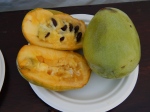
04-03_PawPawfruit_SteveYesterday I ate my first paw paw of 2015. The sensation was first one of childlike wonder and excitement, not like what I feel when I taste the first run of maple sap or pluck the first shiitake mushroom from a log on our farm. Following this moment of pure joy are memories of the past years, and the connection to a seasonal cycle, where I connect to the larger part of nature, marking moments in time with plants, animals, and fungi as they emerge from dormancy, grow, store energy, and reproduce.
These seasonal cycles are incredible powerful in grounding me to time and place. And each season it gets deeper. I’ve now consciously witnessed the leaves turn color and fall to the ground for 20+ years. I’ve now tapped trees and welcomed the slow thaw of the forest for over 10 years. I’ve now inoculated and harvested mushrooms from the woods for 6 years. And I’ve gleefully plucked and gorged myself on paw paws for the last 4 years.
And while these things offer me a sense of place, and some sense of consistency as a member of the natural world, each year is also, of course, different and unique. Last year at this time as I cut the first paw paw fruit,Farming the Woods had just been released into the public eye. The year before that, Ken and I were spending every spare moment writing away and visiting case study sites. And this year, I am reviewing the big picture of my life, and what it all means, amidst supporting my wife, who was diagnosed with Colon cancer in July.
The fear, grief, and uncertainty of the future has put me in a completely new frame of mind. For one, the important things in life – family, friends, and place – have been dramatically sharpened into focus. I’ve also had to adapt in news ways to be ready and willing to change plans and change course at a moments notice. And I witness in awe of the lady I love, and her ability and strength to fight and process her experience of such a terrible disease.
The good news is that the cancer appears very treatable at this point. All of this will be far behind us by the next paw paw harvest. It should even be past us by the 2016 sugaring season. And, as I continue to build my relationship to my partner, my world, and these amazing forest cycles, I also am finding that i have some incredible friends in the forest who are along for the ride.
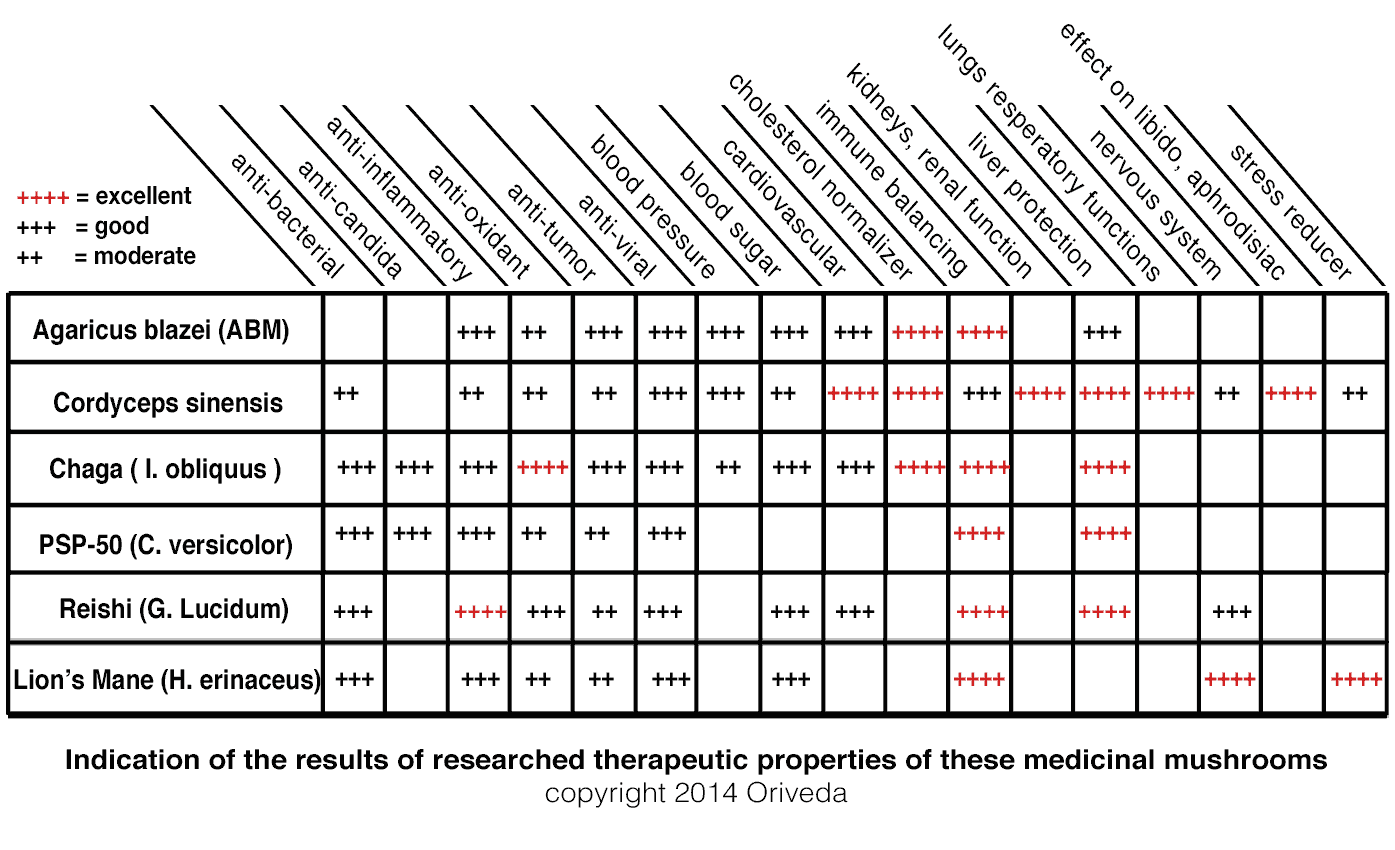
mushroom-chart-LARGEI knew that mushrooms are not just food but medicine – powerful medicine. Various compounds in shiitake, oyster, lions mane, maitake, reishi and turkey tail all support immune system health, critical in the wake of chemotherapy. Maitake in particular helps with keeping white blood cells healthywhile lions mane keeps the nervous system active and strong. Since chemo is a treatment which attacks the body, killing short lived cells and thus messing with normal function, it’s critical for mushrooms to be part of the healing process. Not just any mushrooms, but specific ones, in specific forms. To be more precise, both modern medicine research and traditional chances medicine use hot water extracts of mushrooms as the delivery method for the medicinal benefits. This process extracts the powerful polysaccharides and other compounds which do much of the critical work of healing.
I was surprised to find out that most mushroom medicines out on the market are simply made from the mycelium of the mushroom that is dehydrated and then powered. This is not the form that research and traditional medicine sees value in. In fact, the general consensus is that one needs to both harvest a fruiting body, and use a hot water extract, in order to access the medicine. Simply eating fresh mushrooms won’t do it. Of course, eating fresh mushrooms and even the mycelium is beneficial for host of other reasons. There are various effects of the various methods of consuming mushrooms and their compounds. But in the case of treatment for an extreme condition such as cancer, its important to do it the right way. We were surprised at how buried this concept is in the information out there, and that only one company, MushroomScience, offers pills and tincture that is both harvest from the fruiting bodies of log-grown mushrooms, but also does the heat extraction in their preparations.
natures-sunshine-paw-paw-cell-reg-nsppThe paw paw, too, has some absolutely remarkable cancer medicine. Paw paw contains acetogenins, which modulate the production of adenosine triphosphate (ATP) in cancer cells. This essentially reduces the growth of blood vessel which can nourish the growth of these cells. The compound also slows the growth of certain cancer cells that are resistant to some common chemotherapy drugs. An extract from the twigs is mostly commonly used in medicine.
My wife has cancer, and the very forest friends I’ve been getting to know over the past few years are stepping up to help.
Growing up, I always knew that I wanted to spend as much time in the woods as possible. Now, as a farmer and educator, I aim to share what I know and get as many people as possible growing these powerful allies in their woods and gardens. The potential of partnering with the forest, being both steward, producer, and consumer while supporting an abundance and diversity of forest products for future generations is what gets me up in the morning. And I am confident that as long as I partner with the forest in this way, the benefits will continue stacking up.
As I think back on our one year anniversary of publishing Farming the Woods, I am reminded that we are all continually learning. As we walk down the road of seeing the forest for more than just the trees, the good news keeps piling up. And I know that there is even more to the story, more to learn and glean from the gifts of the forest. Some of these offerings are basic, from the incredible nutrition and sustenance of the foods to the healing properties they unleash, while some are more far-flung, such as the potential to use fungi in the production of cheaper, biodegradable batteries to their ability decompose plastic and clean up toxic waterways.
This one year anniversary marks the re-start of regular blog posts to theFarming the Woods website. Read, enjoy, and share. Be in touch if you want us to cover a certain topic. And stay tuned for more exciting developments from the woods.